A Crafter's Guide to Giant Paper Flower DIY
Share
Creating a beautiful giant paper flower is a rewarding project that transforms any space. The process is straightforward when broken down into clear steps. This guide simplifies the journey, ensuring you can produce a stunning, professional-looking bloom with confidence. By focusing on a solid foundation and methodical assembly, you'll avoid common frustrations and achieve a flawless result every time.
Getting Started with Giant Flowers

If the thought of making giant paper flowers seems daunting, this guide is here to help. We'll turn what appears to be a massive undertaking into a genuinely fun and rewarding project. We will focus on clear, actionable steps to build your confidence and help you create something truly spectacular.
The Benefits of a DIY Giant Paper Flower
Choosing to make your own giant flowers is about more than just crafting; it's about creating high-impact decor on your own terms. This approach gives you total creative control and comes with some surprisingly practical benefits.
- Benefit 1: Significant Cost Savings: Custom-made large-scale floral art for an event can be very expensive. By making them yourself, you achieve the same jaw-dropping effect for a fraction of the price, freeing up your budget.
- Benefit 2: Complete Creative Freedom: Don't be limited by off-the-shelf options. A giant paper flower DIY project allows you to perfectly match wedding colors, corporate branding, or nursery decor. Every detail—from size and color to the bloom style—is your choice.
- Benefit 3: Unexpected Durability: While paper may seem fragile, using heavy cardstock or EVA foam results in incredibly sturdy flowers. Foam flowers are even weatherproof, making them a fantastic and reliable choice for outdoor use cases.
The secret to a professional-looking flower isn't magic. It's method. The outcome depends on three key actions: carefully shaping each petal, building a strong core structure, and layering everything just right. Master these, and you'll create a flawless giant flower.
A Trend That's Here to Stay
The desire for handmade, personalized decor is growing rapidly. The global artificial flowers market, which includes the booming paper flower scene, hit USD 3.09 billion in 2024 and is projected to reach USD 4.49 billion by 2030.
The growth in paper flowers is particularly notable, with an 8.2% CAGR. This is largely driven by eco-conscious crafters who prefer sustainable and customizable paper alternatives. You can explore the full research on this growing market trend from Grand View Research. This isn’t just a passing hobby; it’s part of a larger shift toward personalized and sustainable creativity.
Gathering Your Crafting Essentials
Before shaping your first petal, gathering the right supplies is crucial for a smooth and successful project. Having everything ready from the start eliminates frustration and interruptions. Your materials are the foundation; the right choice will completely change the final look, feel, and even the lifespan of your flower.
Material Comparison for Your Giant Flower Project
Choosing your primary material is the most important decision. To make it easier, here's a quick breakdown of the most popular options and their ideal use cases.
| Material | Best For | Durability | Ease of Use | Cost |
|---|---|---|---|---|
| Cardstock | Indoor decor, structured flowers (like roses), crisp folds. | Low | Moderate | $ |
| Crepe Paper | Realistic, soft-looking flowers (like peonies), delicate curves. | Low | Challenging for beginners | $$ |
| EVA Foam | Outdoor events, long-term displays, waterproof needs. | High | Easy to shape with heat | $$$ |
Your choice comes down to your project's specific needs. Cardstock is a fantastic and affordable starting point for indoor pieces, but for durability and weather resistance, EVA foam is the superior choice.
Diving Deeper Into Your Material Choices
- Cardstock (65-100 lb): This classic choice provides sharp, defined petals perfect for structured flowers like roses. It's widely available and budget-friendly for indoor use cases.
- Crepe Paper (180g): For a softer, more organic look, 180g crepe paper is ideal. Its stretch allows for realistic shaping, perfect for flowers like poppies and peonies.
- EVA Foam: When durability is a must, EVA foam is the answer. It's waterproof, holds its shape, and is perfect for outdoor wedding backdrops, rental inventory, or vibrant festival displays.
Your Essential Toolkit
A few key tools will make all the difference in achieving professional results.
- A Solid Hot Glue Gun: A dual-temperature gun is highly recommended. Use the low-temp setting for delicate foam and the high-temp setting for a rock-solid bond on heavier cardstock.
- Sharp Craft Scissors: Dedicated sharp scissors are crucial for clean cuts. Keep a large pair for big petal shapes and a smaller, detailed pair for precise work.
- Shaping Tools: A simple wooden dowel rod is perfect for curling petals. For crisp creases in cardstock, a bone folder is invaluable.
- Pencil and Templates: Consistency is key. Use a pencil to trace templates, whether you print them yourself or use those in a DIY kit.
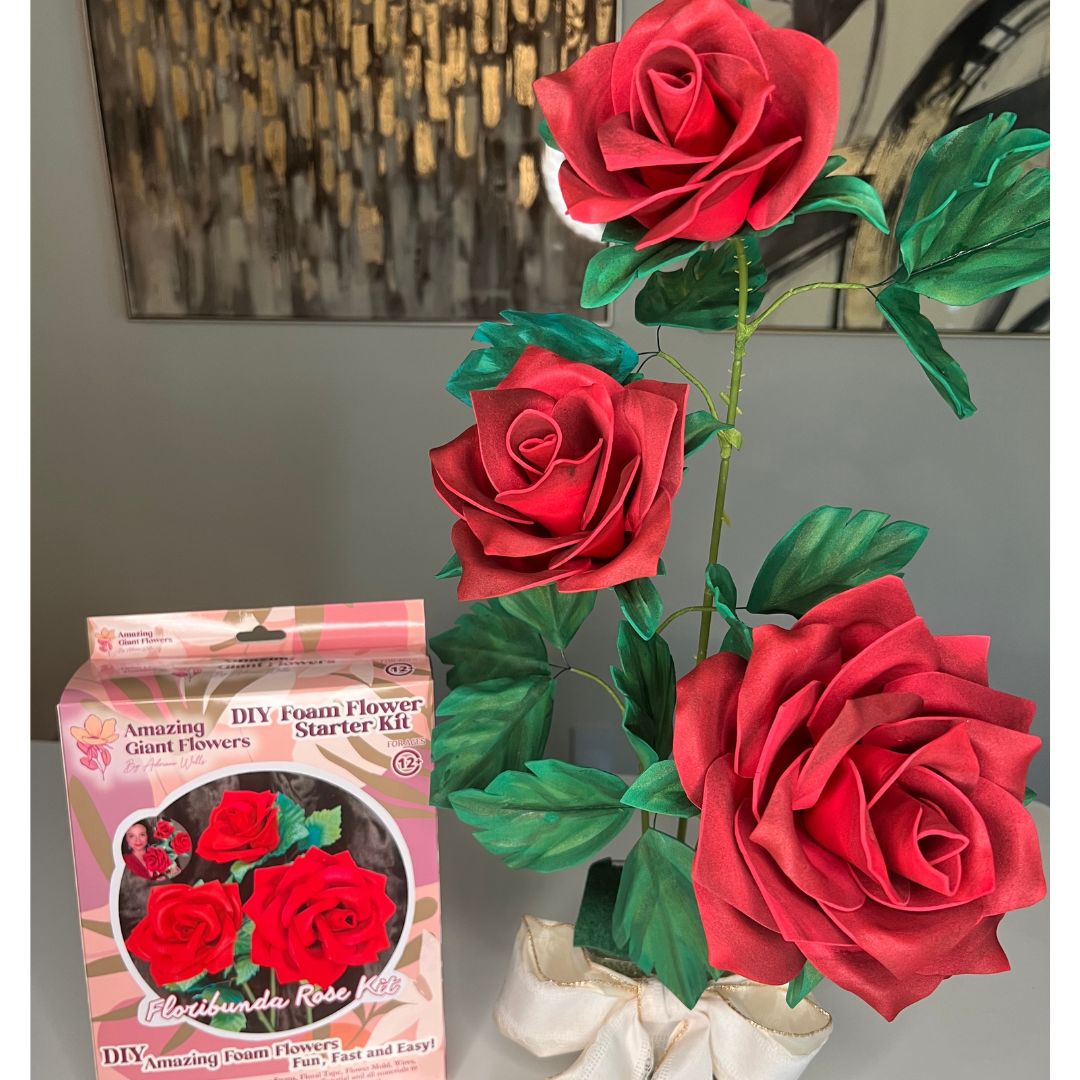
If you want to skip the tracing and cutting, a pre-made DIY kit from Amazing Giant Flowers is a fantastic time-saving option. These kits include pre-cut EVA foam petals and all necessary supplies. For those using foam, understanding the different types is beneficial. Explore our guide on choosing the right foam for your project for more details.
Bringing Your Giant Flower to Life
This is where your carefully cut pieces become a stunning, three-dimensional flower. By following a simple, reliable method, you can build a professional-looking bloom every time.

Your material choice dictates the final result. Now, let’s get those petals ready.
Step 1: Shape Your Petals for a Realistic Look
Flat, lifeless petals are a giveaway of an amateur project. Giving each petal dimension is one of the easiest and most impactful steps.
- Step 1.1: Lay a petal flat in your palm.
- Step 1.2: Use a wooden dowel or thick marker to gently roll the top edges of the petal backward, curling them away from the flower's center.
- Step 1.3: Repeat for every petal. The time you invest here directly enhances the realism of your final creation.
If you’re working with EVA foam, a quick pass with a heat gun makes the foam pliable for gorgeous, permanent curves. For guidance, check out this guide on the best way to cut and handle foam.
The secret to a natural-looking flower is slight imperfection. Vary the curl on each petal—some tighter, some looser. This subtle variation makes the final bloom look truly organic and alive.
Step 2: Build a Stable and Sturdy Core
A strong, stable core is the foundation that prevents a drooping, wobbly flower.
- Step 2.1: Cut a circular base (6–8 inches in diameter) from heavy-duty cardstock or cardboard.
- Step 2.2: Snip a small one-inch slit at the bottom center of each petal.
- Step 2.3: Overlap the two flaps you just created and secure them with a dot of hot glue. The more you overlap, the more "cupped" and upright your petal will be.
- Outcome: This slit-and-glue technique forces the petals to stand up and curve out, creating instant volume and a professional structure.
Step 3: Layer for Fullness and a Lush Bloom
With your petals shaped and base ready, it's assembly time. Building from the outside in with the largest petals first prevents gaps and creates a beautiful, layered effect.
- Step 3.1: The Outer Layer: Glue your largest petals onto the outer edge of your circular base, holding each for 10 seconds to ensure a solid bond. Overlap each petal by about an inch as you complete the first ring.
- Step 3.2: The Middle Layer: Switch to your medium-sized petals. Glue this next layer just inside the first, staggering the petals to cover the seams where the large petals meet. This makes the flower look full and seamless.
- Step 3.3: The Inner Layer: Use your smallest petals to fill in the center. Overlap the bottom slits more as you get closer to the middle to make the petals stand up straighter, creating a tight bud look.
- Outcome: This methodical layering is a foolproof way to build incredible volume, ensuring a stunning result whether you use a template or one of our pre-cut kits from Amazing Giant Flowers.
Adding Professional Finishes and Custom Touches

You’ve built a beautiful flower. Now it's time for the final touches that elevate your giant paper flower from a nice craft project to a stunning piece of art. This is your chance to inject your style and create something unforgettable.
Creating Realistic Depth with Color
A real flower is never one solid color. Adding subtle color gradients is a simple technique that gives your flower a high-impact, realistic look.
Here are two effective methods:
- Soft Pastels for a Subtle Blend: For a delicate, romantic look, scrape chalk pastel dust onto paper, pick it up with a cotton ball, and gently brush it onto the petal edges. This is perfect for adding a soft blush to a white rose.
- Spray Paint for Bold Gradients: For a more dramatic effect, spray paint is fantastic. Hold the can 10-12 inches away and use light, sweeping motions to add a whisper of color, like a gold shimmer on cream-colored petals.
Adding color introduces detail that makes your flower more complex and believable.
Adding Embellishments for a Touch of Elegance
Embellishments are your secret weapon for personalizing your flower and tying it into a specific theme.
Consider these use cases for the flower's center:
- Weddings & Formal Events: Hot-glue a cluster of flat-backed pearls or rhinestones in the center for classic elegance.
- Holiday & Party Decor: Run a fine line of craft glue along petal edges and dust with fine glitter for a festive sparkle that catches the light beautifully.
- Realistic Flower Centers: For a textured look like a daisy, cut a fine fringe along a strip of contrasting paper, roll it into a tight spiral, and glue it in the middle.
Design Secret: When displaying your flowers, group them in odd numbers. An arrangement of three or five flowers is more natural and visually pleasing than groups of two or four.
Use Case: Matching Brand Colors for Corporate Events
A giant paper flower DIY approach is perfect for creating branded decor. I was once hired to create a floral wall for a trade show booth, and the flowers had to exactly match the client’s Pantone color.
Here’s the step-by-step process we used for a perfect outcome:
- Start with a Neutral Base: We built the flowers from high-quality white EVA foam, which provides a perfect blank canvas for painting without warping.
- Custom-Mix the Paint: We took the brand's Pantone code to a paint store and had them mix a sample pot of custom latex paint.
- Apply with a Sprayer: Using a basic paint sprayer, we applied a light, even coat to every petal. This delivered a flawless, factory-like finish that was a perfect match. You can find more tips in our painting techniques for foam core projects.
The outcome was an incredible, fully branded photo backdrop unique to their booth, transforming a DIY project into a powerful, professional tool.
Displaying and Installing Your Floral Masterpieces
After creating a stunning bloom, the final step is displaying it for maximum impact. This section provides practical solutions for secure and impressive installation. We'll walk through the best methods for wall mounting, creating freestanding arrangements, and prepping flowers for handheld use.
Securing Your Flowers to Any Wall
A feature wall of giant flowers is a popular and stunning decor choice. The key is using a strong attachment method that won’t damage your walls.
Here are my go-to solutions for damage-free wall mounting:
- Velcro Command Strips: Ideal for lightweight cardstock or smaller foam flowers. They create a strong bond and peel off cleanly.
- Mounting Tape: For heavier flowers, quality mounting tape provides extra security. Ensure it’s rated for the weight and designed for indoor use.
- Wire Loops: For very heavy flowers, build a wire loop into the back of the flower’s base with floral wire and hot glue. This lets you hang the flower securely from a picture hook.
Quick Tip: Lay your flowers on the floor first to plan your arrangement. This allows you to perfect the composition without repeatedly sticking and unsticking them from the wall.
Building Impressive Freestanding Flowers
Freestanding flowers are perfect for lining a wedding aisle or flanking a stage. The challenge is creating a sturdy stem that can support a heavy flower head.
Here’s a step-by-step process for a reliable stem:
- Find Your Core: Use 1/2-inch or 3/4-inch PEX tubing from a hardware store for a strong yet flexible stem.
- Create a Solid Base: Drill a hole in a wooden plaque or piece of plywood to fit the PEX tubing snugly. This heavy, flat base prevents tipping.
- Wrap the Stem: Tightly wrap the PEX tubing with green floral tape, overlapping as you go for a seamless look.
- Attach the Flower Head: Secure the flower head to the top of the stem. Our DIY kits at Amazing Giant Flowers are designed for this exact setup.
For more ideas on this type of installation, explore our guide to paper flower backdrops.
Prepping Flowers for Handheld Use
Giant flowers also make unforgettable photo props and unique bouquets. For handheld use, comfort and proper angling are key.
Use Case Spotlight: A Modern Bridal Bouquet A bride holding a single, magnificent giant paper rose creates a dramatic, modern, and memorable look.
How to Prepare a Handheld Flower:
- Use a Shorter Stem: A 12-18 inch dowel rod or trimmed PEX tubing is sufficient.
- Add a Comfortable Grip: Wrap the base of the stem with ribbon or fabric that matches the event's colors for an elegant and comfortable hold.
- Get the Angle Right: Attach the flower head to the stem at a slight angle so it faces forward naturally for photos when held.
Your Giant Flower Questions, Answered
Here are answers to some of the most common questions about making giant flowers, so you can feel confident and ready to create.
How Long Does It Take to Make One Giant Flower?
It varies. For a complete beginner, I suggest setting aside 2 to 3 hours for your first flower to learn the process without pressure. An experienced crafter can often assemble one in 60 to 90 minutes. Our pre-cut DIY kits let you skip the cutting and significantly speed up the process.
What Is the Best Material for Outdoor Events?
For any outdoor use, EVA foam is the best choice. It is waterproof, durable, and holds its shape in various weather conditions, unlike paper.
Ideal use cases for EVA foam flowers include:
- Garden Weddings: Create breathtaking backdrops that won’t wilt.
- Festivals: Build vibrant, weather-resistant photo ops.
- Storefront Displays: Craft eye-catching decor that lasts for weeks.
When your reputation is on the line and you need your decorations to last, always go with foam. The peace of mind is worth everything.
Can I Really Get a Professional Look on My Own?
Absolutely. A polished, "wow" factor comes from technique and attention to detail, not an innate artistic gift.
The key steps for a professional outcome are:
- Start with quality materials that hold their shape.
- Take time to shape every single petal for life and movement.
- Follow a proven assembly method, building your flower layer by layer.
This guide teaches you those core principles, enabling you to create flowers that look like they came from a high-end event studio.
How Should I Store My Giant Flowers After an Event?
Proper storage is key to reusing your flowers. Protect them from dust, moisture, and being crushed. I recommend using large, sturdy cardboard boxes with soft tissue paper between each flower. If they are on stems, detach the heads for easier packing. Store them in a cool, dry spot away from direct sunlight.
For more creative ideas, find inspiration in our guide to making amazing large paper flower decorations.
Ready to bring your own unforgettable floral vision to life? Amazing Giant Flowers has everything you need, from complete DIY kits with step-by-step video tutorials to fully custom-designed installations. Come explore our shop and let's get you started at https://www.amazinggiantflowers.com.