A Crafter's Guide to Every Type of Foam for Giant Flowers
Share
Welcome, fellow creators! Choosing the right type of foam is the single most important decision for building giant flowers or event props. The right material leads to a stunning, long-lasting creation, while the wrong one can prevent your vision from holding its shape. This guide will walk you through the process, step by step.
Choosing The Perfect Type Of Foam For Your Masterpiece
Think of foam as the skeleton for your artwork. A strong foundation ensures your vision comes to life beautifully and stays that way. This guide will take the guesswork out of the equation by breaking down the most common foams we artists and event designers use every day, helping you pick the perfect material for whatever you're dreaming up.
We'll explore the unique benefits of each foam—from the flexible, vibrant EVA foam loved for petals, to the sturdy, structural integrity of polystyrene for solid bases. By the end, you'll be able to perfectly match the foam to your project's needs, your budget, and your own creative workflow.
Key Steps To Your Decision
Before diving into specific materials, let's create a quick mental checklist. Answering these questions first will instantly help you narrow down the field and point you toward the best type of foam for your specific project.
- Define Your Project's Needs: Are you shaping delicate, curved flower petals that need a soft, natural look? Or are you carving a solid, blocky base for a huge prop? The need for flexibility versus rigidity is your first decision point.
- Consider the Environment: Will your piece be displayed at an indoor gala or brave the great outdoors? Durability, UV resistance, and water resistance are essential for anything that won't be tucked safely inside.
- Set Your Budget: Material costs can range from affordable to a serious investment. Knowing your budget helps you decide whether to spring for a premium foam or find a cost-effective workhorse that still gets the job done.
This simple decision-making flowchart is a great visual for how to approach your choice, starting with your project's main requirements.

As you can see, the type of project is your first filter, pushing you toward either flexible or rigid foams. From there, durability and cost help you zero in on the perfect match.
Alright, let's dive in and find the perfect foam partner for your next amazing creation. For those of you working on more specialized projects, you might also be interested in learning about advanced options like cross-linked polyethylene foam in our detailed guide.
Let's Talk Foam: A Look at the Most Popular Types for Crafting
Walking into a craft store or browsing online for foam can feel overwhelming with so many options! But for artists and event designers, a few clear winners always rise to the top. Think of each type of foam as having its own personality—some are flexible and easy-going, others are strong and rigid. Let’s get to know the main players and their benefits.
This variety isn't just in the craft world; it's a huge industry. Flexible foam is by far the most dominant, making up about 58.7% of the entire industrial foam market. While we love flexible foams for their versatility, it's the rigid foams that are growing the fastest, finding new uses in everything from construction to massive prop fabrication. You can see the full breakdown in this industrial foam market report.
EVA Foam: The Flexible Favorite
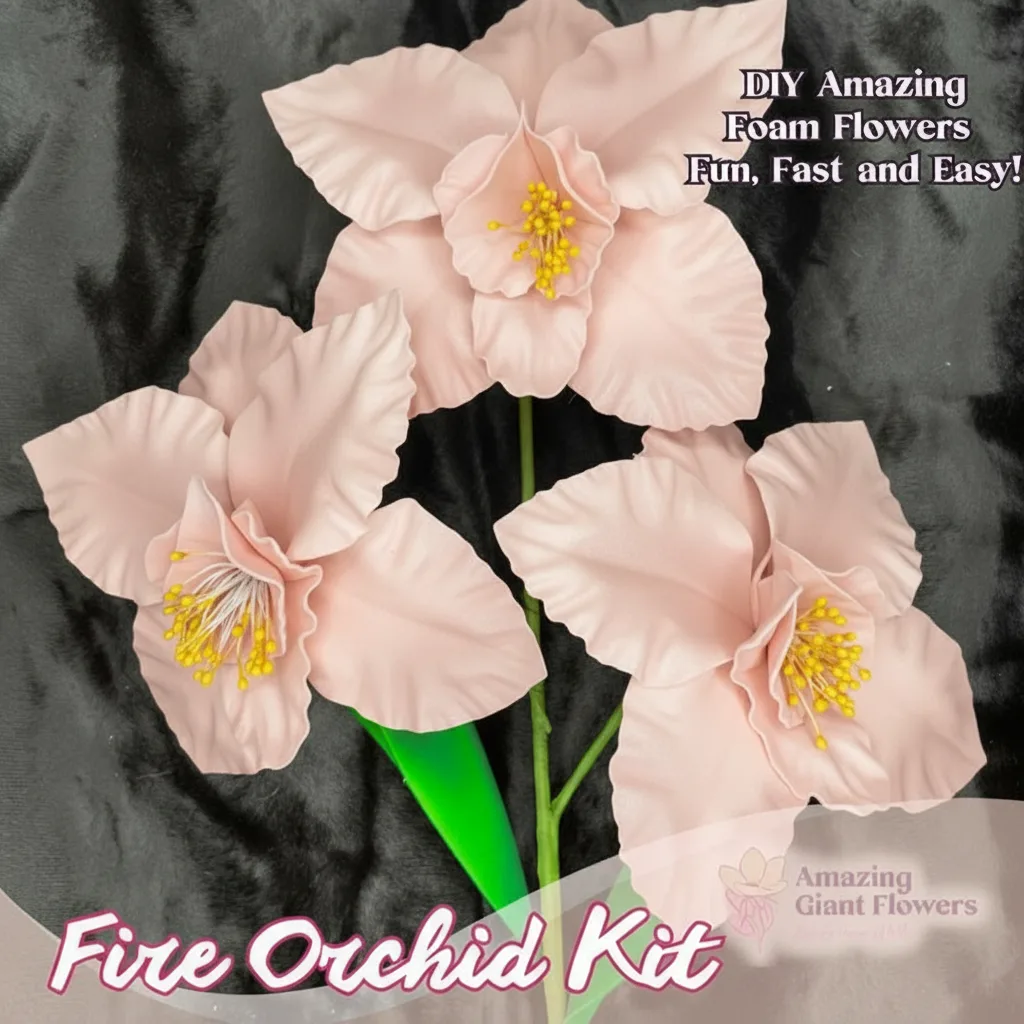
When it comes to making giant flowers, EVA (Ethylene-Vinyl Acetate) foam is the undisputed champion. If you've ever used a yoga mat or seen incredible cosplay armor, you've seen EVA foam in action. It’s lightweight, surprisingly durable, and has a wonderful bend to it. Plus, its smooth, non-porous surface is a dream to paint. The real magic? EVA foam is thermoplastic. A little bit of heat, and it becomes soft and pliable, letting you shape the most realistic, delicate curves into petals and leaves. Once it cools, it holds that shape perfectly.
- Use Cases: Giant flower petals and leaves, cosplay builds, and any project that needs smooth, graceful curves.
- Key Benefit: Heat-formability. It gives you incredible artistic control to create natural, organic shapes that last.
-
Benefit Breakdown:
- Eliminates Cracking: Bend and shape without fear of your material snapping.
- Smooth Finish: Provides a perfect canvas for paint.
- Durable & Lightweight: Easy to work with and built to last.
We've got a whole guide dedicated to this amazing material. Dive deeper into how to create beautiful foam flowers with Blossom EVA Foam.
Polystyrene: The Sculptor’s Block
You probably know this one by its most famous brand name: Styrofoam. Polystyrene is a rigid, feather-light foam that's incredibly easy to carve. It usually comes in big blocks or thick sheets, which makes it perfect for creating solid bases, 3D props, or large-scale letters for events.
Think of Polystyrene as a block of clay for sculptors who prefer to subtract, not add. You start with a solid piece and carve away everything that doesn't look like your final vision.
Its biggest advantage is that it’s exceptionally light, which is a lifesaver for large props that need to be moved around. The trade-off is that its open-cell structure makes it a bit fragile and easy to dent. A crucial tip: always seal it with a water-based primer before painting, as solvents in most spray paints will melt it on contact.
- Use Cases: Structural bases for large flowers, 3D sculpted props, event signage and lettering.
- Key Benefit: Extremely lightweight and easy to carve, making large-scale projects manageable.
Polyethylene Foam: The Sturdy Supporter
Polyethylene (PE) is the tough, dense cousin in the foam family. Compared to EVA, it's much more rigid and is a closed-cell foam, meaning it won't absorb water. You'll find it in stiff planks or flexible rolls, and it’s known for its incredible structural support and impact resistance. This is the material you want for the unseen heroes of your project.
- Use Cases: Internal armatures for big props, strong waterproof stems for giant flowers, and protective padding.
- Key Benefit: It offers fantastic strength and water resistance, giving your complex projects a reliable internal skeleton.
-
Benefit Breakdown:
- Waterproof: Perfect for outdoor or long-term installations.
- Structural Integrity: Provides hidden strength to keep your creations standing tall.
- Impact Resistant: Protects your art during transport and setup.
A Side-By-Side Look at Key Foam Properties
Choosing the right type of foam is a lot like picking the right fabric for a dress—the material's personality has to match the design. Some foams are stiff and structural, while others are soft and drapey. Getting this choice right from the start leads to a fantastic final product.

Let's dive into the practical differences between the most common foams you'll encounter. We’ll compare everything from their sturdiness and flexibility to how they play with heat guns and paint. Think of this as your cheat sheet for making a smart, confident choice every time.
Density And Durability
Density directly relates to strength and longevity. A denser foam is your best friend for props that need to survive being moved, handled, or displayed outdoors. It's the difference between a prop that looks great for one night and one that looks great for years.
- Low-Density Foams (like Polystyrene): These are incredibly light and easy to carve. They are best suited for static, single-use props where weight is a primary concern.
- High-Density Foams (like EVA and Polyethylene): Here's where you get the best of both worlds—light enough to manage, but tough enough to last. These foams can take an impact, bend without breaking, and hold their shape through event after event. If you want to build something with real structural integrity, exploring a high-density foam sheet is a great next step.
Understanding density helps you predict how your final piece will feel and perform. A dense foam gives a professional, solid feel, while a light foam is the perfect solution for creating huge props that won't break your back.
Flexibility And Heat Forming
This is where the real artistry comes in. A foam’s ability to bend, curve, and hold a shape is what allows you to create the organic, flowing lines of a flower petal or a twisting vine. For us giant flower makers, this is a key feature.
EVA foam is the undisputed champion here. A little attention from a heat gun makes it soft and pliable, letting you shape it into elegant curves. Once it cools, that beautiful new shape is locked in for good. Polystyrene, by contrast, is completely rigid—it will snap before it bends.
Workability: Cutting And Painting
Finally, how easy will this foam be to work with? The right type of foam can make the creative process feel effortless and enjoyable.
1. Cutting Methods:
- EVA Foam: Use a fresh, sharp craft knife or box cutter. The trick to getting smooth curves is to make several shallow passes instead of trying to cut through in one go.
- Polystyrene: A hot wire cutter is best. It melts through the foam, leaving a perfectly smooth edge with no mess. A serrated knife can also work, but may require sanding.
- Polyethylene: This one is tougher. Use a sharp utility knife and a bit more force to cut cleanly compared to EVA.
2. Painting And Adhesives:
- EVA Foam: The smooth, closed-cell surface is a dream to paint. It takes water-based acrylics beautifully and forms an incredibly strong bond with contact cement.
- Polystyrene: This foam is sensitive! You must seal it with a water-based primer first. Stick to foam-safe glues or a low-temp hot glue gun.
- Polyethylene: Its slick surface often needs to be scuffed with sandpaper or treated with a special primer to get paint and glue to stick properly.
Detailed Foam Properties Breakdown
To make things even clearer, here’s a quick-reference table that lays out how each foam type stacks up across the most important properties for crafters.
| Foam Type | Density | Flexibility | Heat Forming | Paint Compatibility | Cutting Method |
|---|---|---|---|---|---|
| EVA Foam | High (ranges from 38-85 kg/m³) | Excellent; bends without breaking | Excellent; holds shape after cooling | Excellent with most paints; sealing is optional | Sharp knife, box cutter |
| Polyurethane | Varies (Low to High) | Good (flexible) to Poor (rigid) | Limited to poor | Good, but may need sealing | Sharp knife, serrated blade |
| Polystyrene | Very Low | Poor; rigid and brittle | No; will melt and release fumes | Poor; must be sealed with water-based primer first | Hot wire cutter, serrated blade |
| Floral Foam | Very Low | Poor; crumbles easily | No; will disintegrate | Fair, but absorbs a lot of paint | Knife or wire |
| Polyethylene | Medium to High | Good; semi-rigid but flexible | Limited; can be shaped with high heat | Poor to fair; requires surface prep and special primers | Sharp utility knife, band saw |
| Foam Latex | Low | Excellent; very soft and sponge-like | Not applicable | Excellent; requires flexible paints | Scissors, sharp knife |
| Upholstery Foam | Low to Medium | Excellent; very soft and compressible | No; will melt or burn | Poor; absorbs paint like a sponge | Electric knife, serrated blade, shears |
This chart should help you quickly narrow down your options based on what your project demands. Whether you need the tough, heat-shapeable reliability of EVA or the lightweight structure of polystyrene, you can see at a glance which material fits the bill.
Our Go-To Foam Picks for Giant Flowers and Props
We've made thousands of giant flowers over the years, and we've learned a thing or two about what works. This section saves you the time, money, and headaches of experimenting. We're going straight to the good stuff so you can start with the right materials from day one.

When it comes to crafting petals and leaves that look lifelike, elegant, and are built to last, our hands-down favorite is EVA foam. It’s the perfect combination of flexibility, a beautifully smooth finish, and amazing heat-formability. For creating realistic floral shapes, it’s simply the champion. This is the type of foam that gives you total artistic freedom.
The Best Foam for Flower Petals and Leaves
EVA foam is the gold standard for flower makers because it provides a smooth, professional look every time.
Key Benefits of EVA Foam for Petals:
- Bends Without Breaking: You can shape EVA foam into the most delicate, organic curves, and it won't crack or snap.
- A Perfect Canvas for Paint: EVA foam has a smooth, closed-cell surface that takes acrylic paint beautifully, giving you rich, vibrant, and even color.
- Lightweight and Durable: Your finished flowers will be surprisingly light, making them a breeze to transport and set up. They're also incredibly durable and will hold their shape for years.
If there’s one thing we’ve learned after all this time, it’s that choosing the right foam is the most important decision you'll make. For petals and leaves, EVA foam is non-negotiable if you want a high-end, professional finish that lasts.
Of course, the crafting world extends beyond just flowers. Many creators use foam for all sorts of amazing props. If you're curious about making other impressive items, this guide on how to make cosplay armor is a fantastic place to get started.
The Best Foam for Structure and Bases
Now, what about the core of your creation? For structural bases, large props, or any element you need to carve into a 3D shape, we always turn to high-density Polystyrene (Styrofoam). It's incredibly lightweight and an absolute dream to sculpt with a hot wire cutter.
Steps for Using Polystyrene Bases:
- Carve It Up: A hot wire cutter is your best friend. It will give you the cleanest, most precise cuts without any of the messy crumbles you get from a knife.
- Seal Before You Paint: This is critical! Always coat your shape with a water-based primer or sealant before painting. Any spray paint or solvent-based paint will literally melt the foam.
- Build Your Foundation: Use your carved polystyrene shape as the solid core for attaching all of those gorgeous EVA foam petals.
Finally, if you need waterproof stems or internal supports that have to be both strong and rigid, Polyethylene foam is an excellent choice. To learn more about using foams for structural elements, check out our guide on working with EVA block foam.
Sourcing And Safely Handling Your Foam
Okay, so you've figured out the perfect type of foam for your next giant flower project. Now, where do you actually get the stuff? Tracking down high-quality materials is the foundation of any piece you want to look professional and last for more than one event.
Fortunately for us creators, materials like EVA foam are part of a huge global supply chain. The worldwide foam market is valued at over USD $115 billion, which is great news—it means there's a solid infrastructure keeping these materials in stock. This reliable market ensures you can consistently find what you need. If you're curious, you can learn more about the foam market's global reach.
Where To Find The Best Foam
You’ve got a few great options for sourcing foam, and each has its own perks. I always recommend shopping around a bit to find the best balance of quality and price.
- Online Craft Suppliers: Websites that cater to cosplayers and crafters are my go-to for high-quality EVA foam. They usually offer sheets in a wide range of thicknesses and colors.
- Industrial Foam Providers: If you're buying in bulk or need something special like high-density polyethylene, going straight to an industrial supplier can save you money.
- Local Home Improvement Stores: Your local hardware or building supply store is a goldmine for polystyrene insulation sheets, fantastic for carving large, structural bases.
Essential Foam Safety Checklist
Let's talk safety, because it should always come first, especially when you’re breaking out the heat guns or strong adhesives. Following a few simple rules lets you focus on the fun part: creating.
Your well-being is everything. Think of these steps not just as suggestions, but as essential habits that protect you and your studio. When you work safely, you can pour all your energy into your art.
Here’s a straightforward safety protocol I stick to on every project:
- Ensure Proper Ventilation: Always work in a well-ventilated space. This is non-negotiable when you're using a heat gun or adhesives. Open a window or use a fan to disperse fumes.
- Wear Protective Gear: Safety glasses are a must when cutting any type of foam to protect your eyes from flying particles. I also highly recommend a respirator mask, especially for heat-forming or sanding.
- Manage Your Heat: Keep a close eye on your heat gun's temperature setting. Overheating the foam can ruin the material and release more intense fumes.
- Keep Your Workspace Clean: A tidy space is a safe space. Keep flammable materials far away from your work area and regularly clean up foam dust and scraps.
Sticking to these guidelines will help you handle any project with confidence and peace of mind. For more detailed techniques, take a look at our guide on the best way to cut foam to get those clean, professional-looking edges.
Your Top Craft Foam Questions, Answered
When you're deep into a project, questions are bound to pop up. To help you push past those tricky spots and get your technique just right, I’ve pulled together answers to the questions I hear most often from fellow crafters and event designers. Let's get these sorted so you can get back to creating.
What’s the Best Foam for Outdoor Event Props?
For any piece that has to live outside, you absolutely need a closed-cell foam. These foams won’t soak up water, protecting your art from the elements.
- Top Choice: EVA Foam. It's my top recommendation, hands down. It shrugs off rain and sun, ensuring your beautiful work won't droop or fall apart.
- For Structure: Polyethylene Foam. This is another fantastic choice, especially for the internal skeletons of your props. It provides a completely waterproof and rigid core.
- Using Styrofoam Outdoors: Polystyrene (Styrofoam) is an open-cell foam and acts like a sponge. If you must use it, you have to seal it completely with multiple, thick coats of a waterproof primer and an exterior-grade paint to create a waterproof shell.
A quick pro tip: always test your sealant on a scrap piece first. You want to be sure it creates a solid barrier without reacting with the foam itself.
How Do I Paint Foam Without It Melting?
Painting foam is simple once you know the secret: it’s all about using the right paint and prepping the surface. A little prep work helps you achieve a beautiful, professional finish.
Steps for Painting Foam:
- Choose a Water-Based Paint: The biggest mistake is using a solvent-based spray paint on sensitive foams. Stick with water-based acrylic craft paints. They’re safe for virtually every type of foam and work beautifully.
- Prime Polystyrene: For a smooth, lasting finish, primer is your best friend. For Polystyrene, you'll need a water-based, foam-safe primer to create a protective shield.
- Prime EVA Foam (Optional): You can often paint directly on EVA. However, if your piece needs to flex and bend, using a flexible primer first will stop the paint from cracking later on.
- Apply Thin Coats: Remember, applying several thin, even layers of paint will always look better and be more durable than one thick coat.
Can I Glue Different Kinds of Foam Together?
Yes, you definitely can! Mixing foam types is how you create complex, interesting props. The trick is picking the right glue for the job.
Starting with the right adhesive means your creation will be solid, secure, and ready for its big moment.
Here's a quick cheat sheet for what glues to use:
- For EVA Foam: Contact cement is the gold standard. It forms an unbelievably strong, permanent, and flexible bond.
- For Polystyrene: Stick with a foam-safe adhesive. A low-temp hot glue gun works for quick tacking, but for a permanent bond, a construction adhesive like Loctite Power Grab is a much stronger choice.
- For Mixed Materials: When joining different foams, a flexible construction adhesive is a great all-rounder. Just be sure to read the label to double-check that it’s compatible with your materials and run a small test first.
Ready to stop guessing and start creating with foam that’s perfect for your project? At Amazing Giant Flowers, we offer premium EVA foam, complete DIY kits, and all the essential supplies to help bring your vision to life.
Explore our collection of high-quality foam and crafting supplies today!