Elevate Displays With Visual Merchandising Flowers

You’re probably looking at a space that feels flat. The products may be right, the signage may be clean, and the traffic may even be decent, but the area still doesn’t pull people in, stop them, or give them a reason to take out their phone.
That’s where visual merchandising flowers earns its keep. Done well, floral merchandising isn’t filler decor. It’s a traffic magnet, a mood setter, a photo trigger, and a sales tool. Small bouquets can soften a shelf story. Large sculptural blooms can turn dead square footage into a destination.
A floral display works because people respond to it fast. Color reads instantly. Shape reads instantly. Scale reads even faster. A customer may ignore a sign, but they rarely ignore a strong floral focal point near an entrance, along a feature wall, or at the mouth of an aisle.
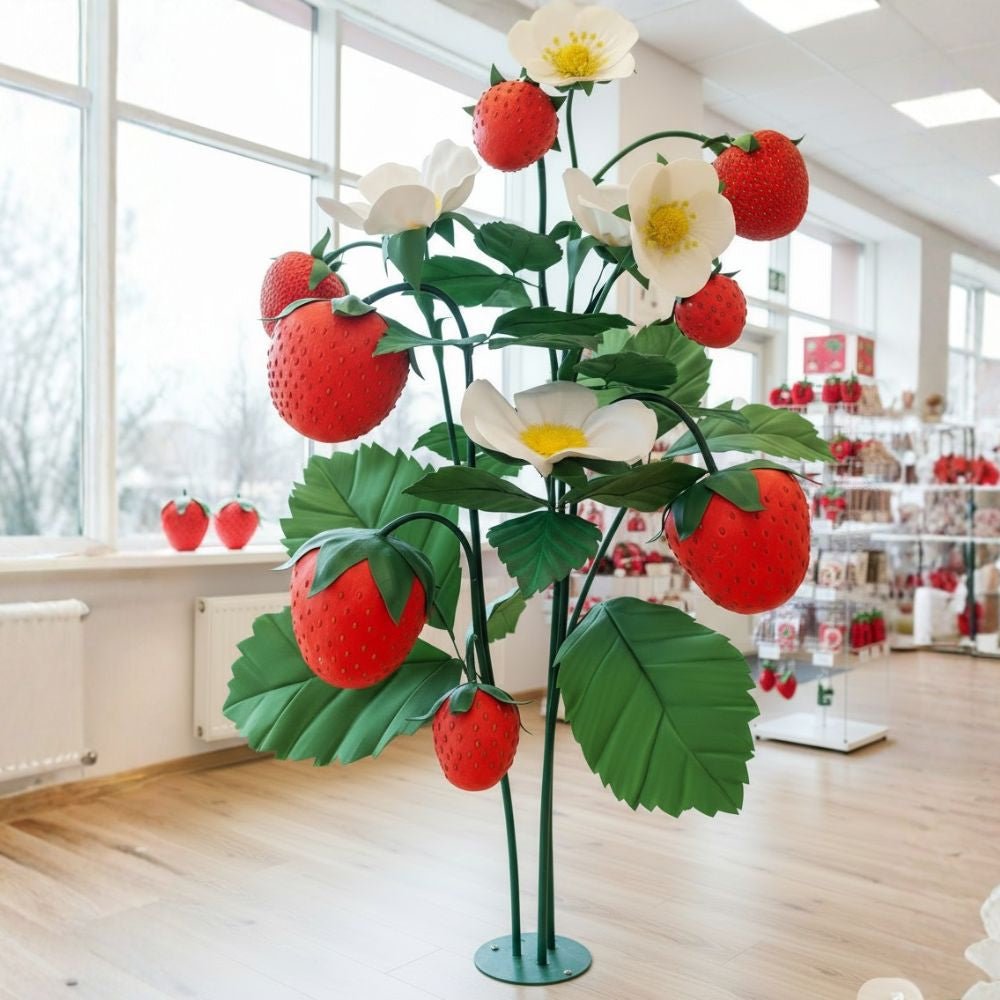
The commercial case is strong. In 2024, floral sales across multi-outlet retail channels in the United States reached $9.1 billion, a 6.5% year-over-year growth, and visually appealing displays near store entrances help drive unplanned purchases and incremental revenue, according to supermarket floral display market data.
Flowers sell mood before they sell product
Most visual categories ask shoppers to think first. Floral asks them to feel first. That’s a major advantage when you need faster engagement in retail, events, hospitality, or branded activations.
What flowers do especially well:
Practical rule: If a floral display looks like background decor, it will perform like background decor.
The strongest displays behave like visual punctuation. They mark a launch, define a zone, frame a hero product, or signal that a customer has entered a shareable moment.
One of the most common mistakes in visual merchandising flowers is spreading floral elements too thinly across a space. A few stems here and there can make a room look decorated, but not merchandised.
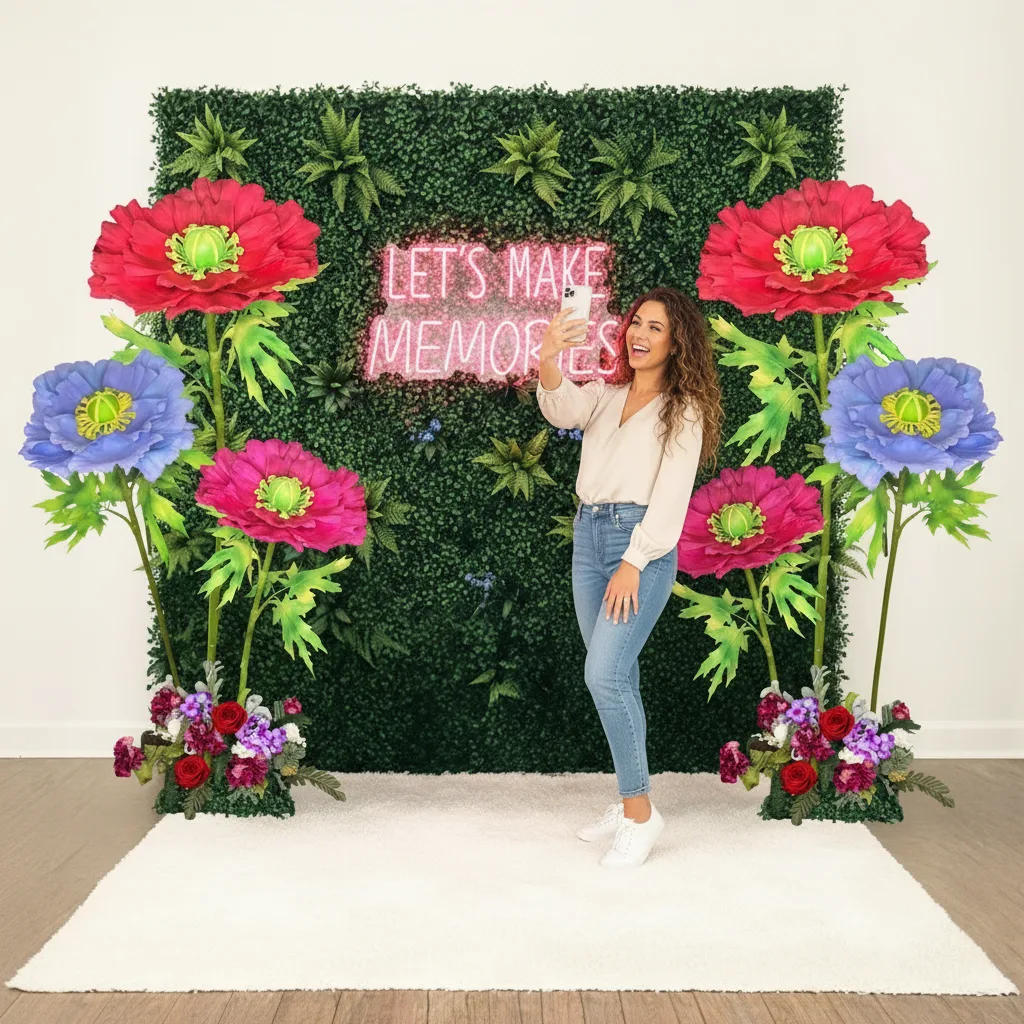
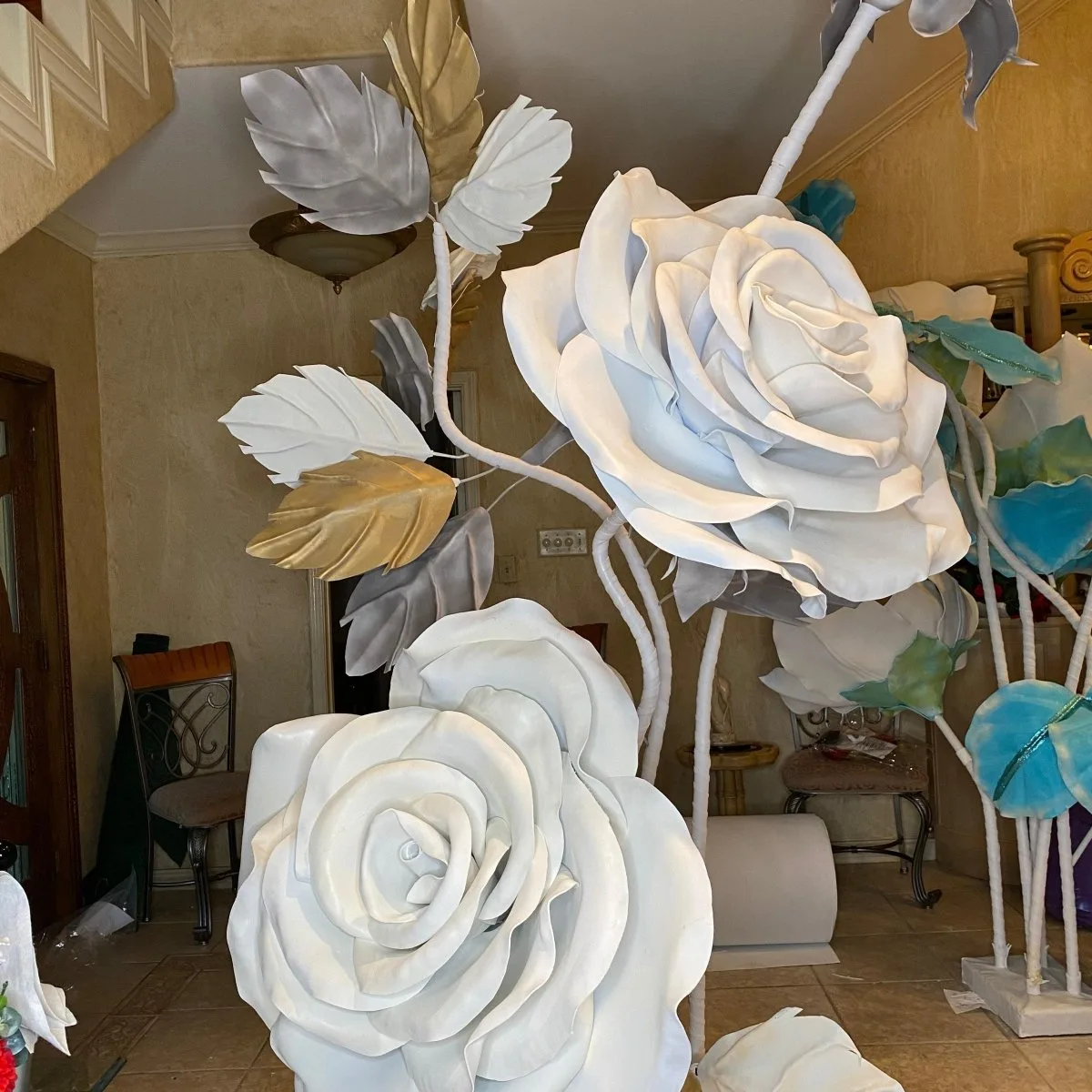
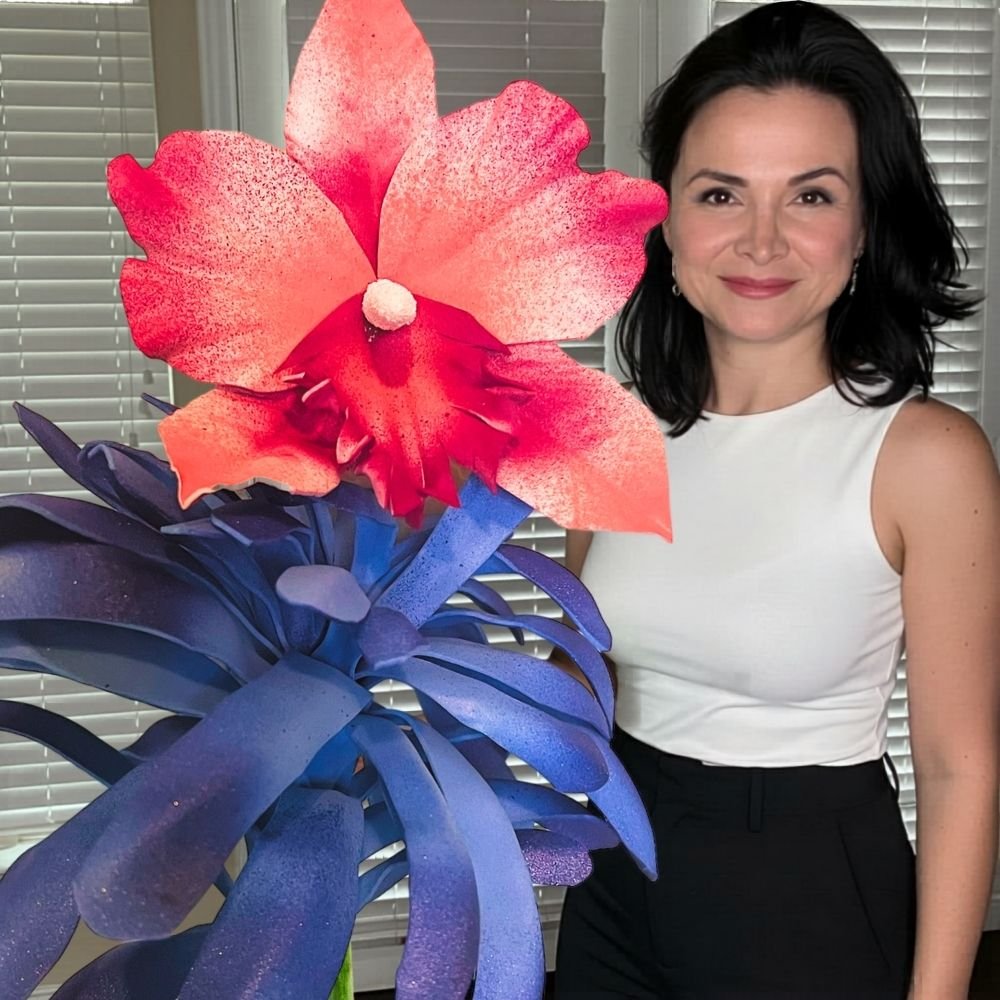
Large-format work usually performs better when you need attention fast. That might mean oversized paper roses, EVA foam sunflowers, giant bluebonnets, suspended floral clouds, or a branded flower wall with one clear focal area. The point isn’t “more flowers.” The point is clearer visual intent.
If you’re developing a front-of-store concept, it helps to study strong retail window display ideas and notice what they all have in common. They don’t whisper. They direct the eye.
Planning Your Floral Merchandising Strategy
Bad floral displays usually don’t fail because of color. They fail because nobody answered the practical questions first. What’s the job of the display? Where will people view it from? Who has to install it? What happens after day three when the launch team is gone?
A display without a target becomes expensive scenery. Before selecting flowers, define the job.
Use this short planning checklist:
Choose one primary goal
Pick one secondary goal
Decide how success will be observed
When teams skip this step, they often end up asking flowers to do everything at once. That usually creates clutter.
The display should fit the architecture before it fits your Pinterest board. Narrow corridors need vertical emphasis. Big open lobbies can handle wider floral massing. Low ceilings punish tall freestanding builds unless the form is carefully compressed.
A few practical matches work well:
The best floral theme is the one that supports the brand without swallowing it.
People often budget for flowers and forget the rest. Installation is where reality shows up. So is storage. So is teardown. So are the little hardware runs nobody planned for.
Include these cost buckets in your working estimate:
- Materials: Flowers, stems, backers, paint, adhesives, foam, fabric, greenery
- Support hardware: Bases, plates, zip ties, wire, clamps, brackets, fishing line, anchors
- Labor: Design, fabrication, install, styling, strike
- Site realities: Lifts, ladders, delivery windows, loading dock constraints
- Maintenance: Dusting, touch-ups, replacement petals, repositioning
- Reuse: Packing materials, storage bins, labeling systems
A strong plan removes pain points early. It also keeps creative energy focused on a display that can be built, installed, and maintained without drama.
A good floral display isn’t a pile of pretty things. It has structure. If the eye doesn’t know where to land, the customer won’t know where to stand, photograph, or shop.
One of the most reliable frameworks in floral merchandising is the pyramid merchandising technique. It organizes arrangements from larger elements at the base to smaller pieces at the peak, which maximizes space, creates a clear focal point, and guides the viewer’s attention upward. That upward movement is especially useful for selfie stations and photo moments, as noted in this pyramid merchandising reference.
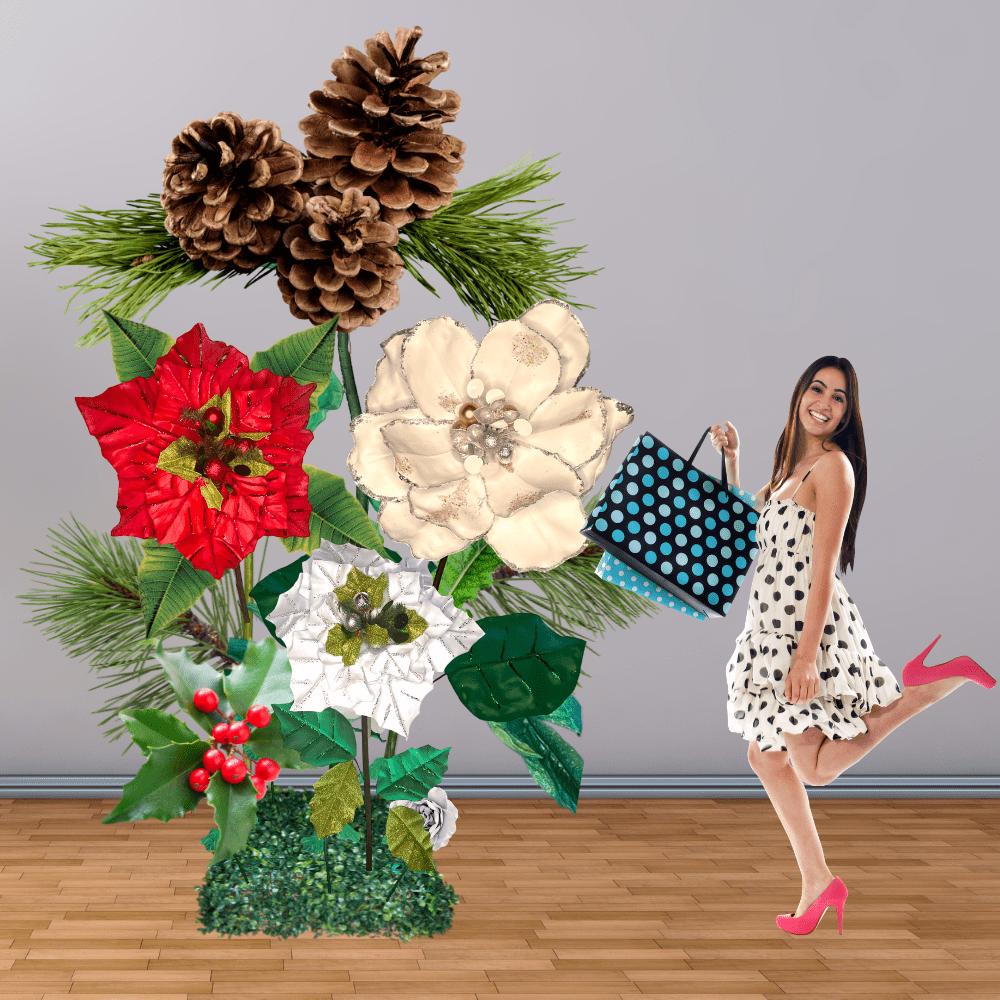
In practice, that means:
Here’s what seasoned merchandisers rely on when a display has to perform, not just look nice in a render.
A quick mockup can save hours of rebuild time. When you need help testing shape, palette, and spacing before fabrication, a tool like the Lunabloom AI design app can help visualize concepts before materials are committed.
Most weak displays suffer from one of these problems:
For oversized builds, one more rule matters. Leave breathing room. If every inch is packed, the display loses silhouette, and silhouette is what makes giant floral work memorable. For wall applications, sculptural builds, and dimensional backdrops, this kind of depth planning matters as much as the flower itself. You can see that clearly in examples of oversized foam flower wall art.
A giant flower only looks giant when the surrounding space lets it read.
Not every project needs a custom fabrication team. Not every team should attempt a complex DIY build, either. The right choice depends on your deadline, your skill level, your access to tools, and whether the display needs to survive one event or multiple uses.
The market has moved strongly toward durable materials. The global artificial flowers market was valued at USD 3.09 billion in 2024 and is projected to grow at a 6.7% CAGR through 2030, with commercial applications such as retail displays and events accounting for over 58% of market share, according to artificial flowers market research. That tells you something important. Long-lasting floral elements aren’t a compromise anymore. They’re a standard commercial solution.
DIY Flower Kits vs. Custom Installations
| Factor | DIY Kits (e.g., EVA Foam) | Custom Professional Installation |
|---|---|---|
| Best for | Makers, small teams, workshops, repeat decor use | Brand activations, large venues, complex installs |
| Budget control | Strong control over spend and pacing | Higher spend, but less internal labor required |
| Timeline | Works best when you have prep time | Better when the deadline is tight and execution must be turnkey |
| Skill level | Requires patience, shaping, assembly, and finishing | Requires less in-house making, more coordination |
| Customization | High, within the limits of the kit and maker ability | Very high, especially for scale, color matching, and unusual forms |
| Reusability | Often excellent if packed and stored well | Also strong, especially for engineered builds |
| Risk | More trial and error | More vendor dependence |
| Control over final look | Very hands-on | More collaborative, less DIY ownership |
When DIY is the smarter move
DIY works well when the flowers themselves are part of the creative process. It’s also a good fit when you want to train a team, stretch one investment across several events, or create modular pieces that can move from a wall to a photo spot to a display table.
DIY usually makes sense if:
If you’re exploring that route, looking through a giant paper flower DIY guide can help you gauge the actual labor involved before you commit.
Custom is the safer choice when the display must be flawless, structurally confident, and camera-ready from every angle. That’s especially true for public-facing builds where poor finishing, weak mechanics, or visible supports will hurt the final impression.
Custom is worth it when failure would be more expensive than fabrication.
The trade-off is simple. DIY buys control and maker satisfaction. Custom buys speed, polish, and fewer surprises on install day.
A floral display can look fantastic on the floor and fail the second it goes vertical. Installation is where design either becomes credible or turns into a hazard. Large flowers catch airflow, lean under their own weight, and reveal every shortcut once guests start walking around them.
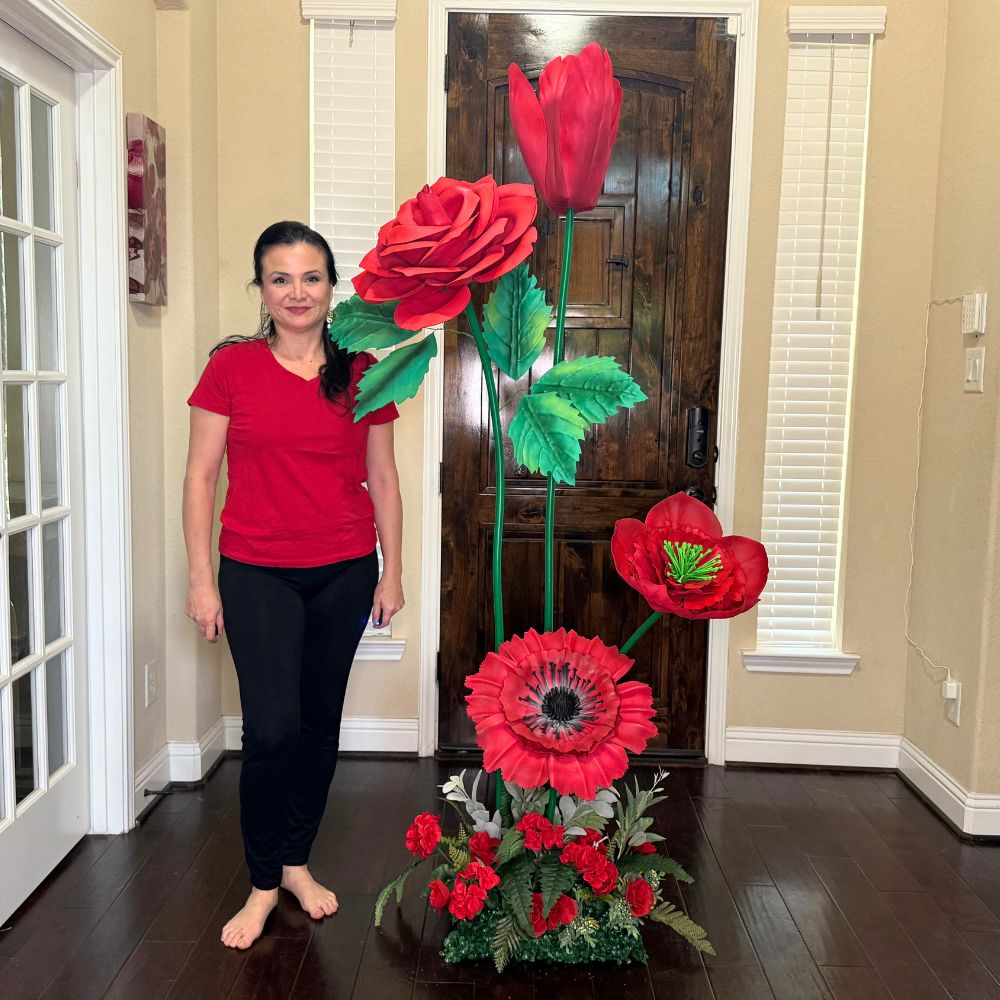
Start with the support method, not the decorative layer. Freestanding flowers need a stable base with enough footprint for the flower head’s size and wind or pedestrian exposure. Wall-mounted flowers need load-appropriate attachment points, not just adhesive optimism.
Use this install checklist on site:
The biggest installation mistake is underestimating side views. Shoppers and event guests rarely stand exactly where the installer stood. They circle, crouch, and photograph from odd angles.
Technical placement matters. Products and displays placed at eye level, 48 to 66 inches, are 82% more likely to be engaged with. For photo backdrops, a height of 5 to 7 feet is optimal for smartphone framing, and 18 to 24 inch spacing between large installations helps prevent visual overwhelm, according to visual merchandising placement guidance.
That has direct practical implications:
If guests have to step too far back to photograph the display, the display is oversized for the room.
Great floral photography depends on flattering people first. If the flowers glow but the guest is in shadow, the photo won’t get shared.
A few methods work reliably:
This walkthrough is useful if you want a visual reference for styling and capture in action.
A successful photo spot has a front, a center, and a reason to stand still. Don’t just install flowers on a wall and assume people will know what to do.
Add simple cues:
- A visual center: One chair, one plinth, one branded product, or one open standing zone
- A clear edge condition: So the photo feels framed, not accidental
- Enough negative space: To keep both subject and flowers readable
- A clean floor zone: Because clutter at foot level ruins otherwise strong shots
The best setups feel effortless to the guest because the installer made dozens of small decisions in advance.
A floral installation should do more than earn compliments. It should produce observable business value. If you don’t define that value early, the display gets judged on taste alone, and taste is a weak way to defend budget.
Retail studies show multi-height floral displays can create a 20 to 40% sales uplift, and sensory-layered displays in some markets have driven 25% higher foot traffic, according to floral display ROI benchmarks. Those numbers are useful because they give your team a benchmark for what “good” can look like.
You don’t need a complicated dashboard to learn whether your display is working. You need a few consistent markers tied to the display’s purpose.
Useful measurement ideas include:
If you want a simple framework to measure ROI beyond gut feeling, use a method that ties visual engagement to one business outcome at a time.
Maintenance is where reusable floral work proves its value. Artificial, paper, and foam flowers can keep performing, but only if someone owns upkeep.
A practical care routine looks like this:
- Dust lightly and often: Soft brushes, microfiber cloths, and low-pressure air work better than aggressive wiping.
- Inspect attachment points: Loose stems and fatigued fasteners become visible before they fully fail.
- Refresh crushed areas: Re-shape petals and leaves after transport or repeated guest contact.
- Store by layer: Use bins, sleeves, tissue, and labels so petals don’t flatten in storage.
- Document the install: Quick photos of hardware placement make future resets faster and cleaner.
For teams considering repeat use, a flower wall backdrop rental model can also help frame the economics of reuse, transport, and upkeep.
Maintenance protects the impression you already paid to create.
A floral display earns its keep when it attracts attention on day one and still looks polished on day ten. That’s the difference between decor and a merchandising asset.
If you’re ready to turn a blank wall, storefront, venue, or activation space into a camera-ready floral moment, Amazing Giant Flowers offers handcrafted oversized floral installations and DIY kits built for retail displays, events, and branded backdrops. Whether you need a custom statement piece or materials to build your own, their team can help you create a display that looks bold, installs cleanly, and gets remembered.
Ready to Create Something Amazing?
Browse our collection of giant flower kits and start your next project today.