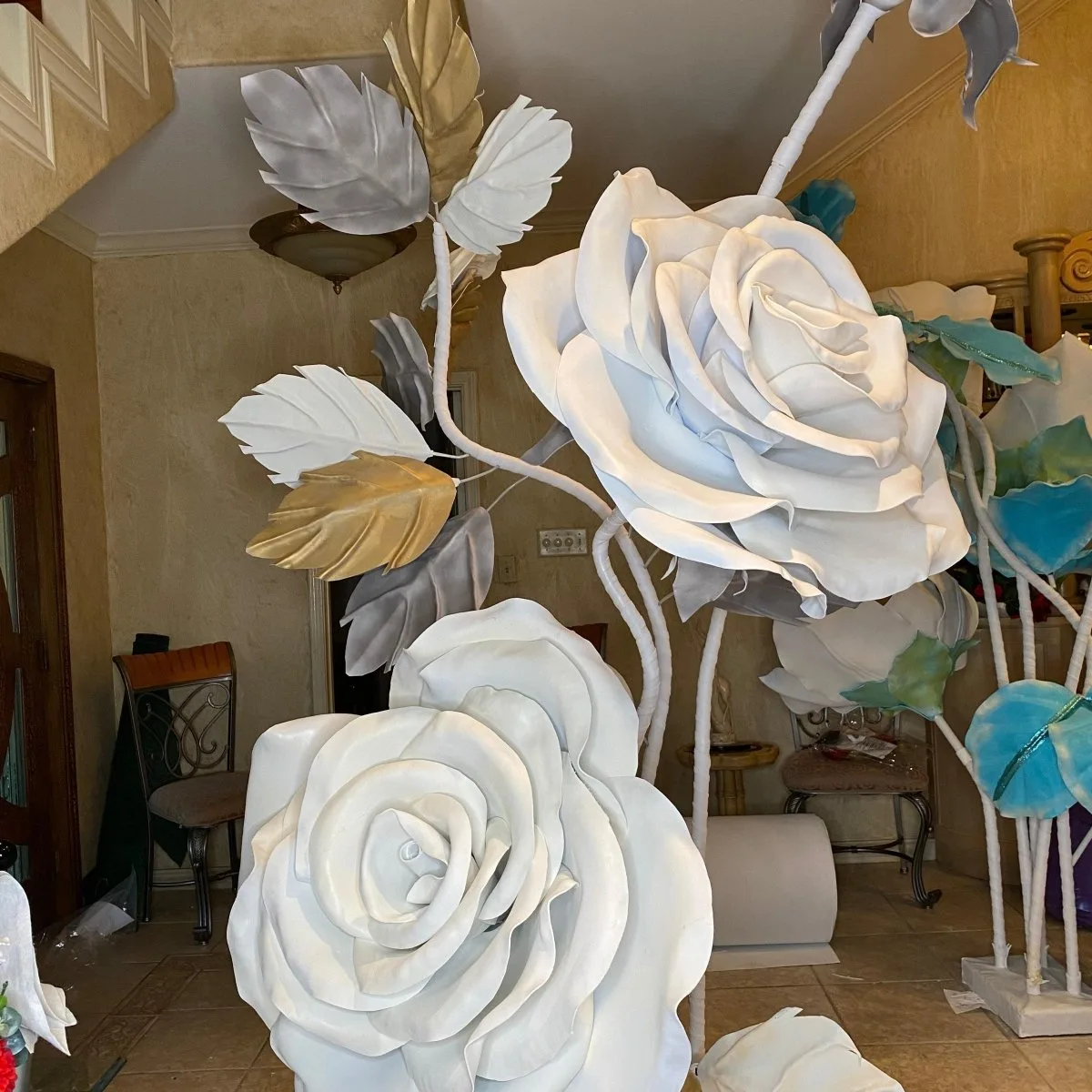
Your Guide to Flawless Foam Board Paint Finishes

When it comes to painting foam, the golden rule is simple: water-based paint is your best friend. This means using water-based acrylics or latex paints. These paints deliver vibrant, even coverage and are essential for a professional look. The best part? They won't melt or dissolve the foam, a common issue with solvent-based paints. For a truly professional outcome, always start with a water-based primer.
Standing in the paint aisle can be overwhelming, but picking the right paint is the most critical decision for your giant flowers. The wrong choice can destroy hours of work. Let's explore the best foam board paint options that ensure your project is a success.
Selecting the correct paint for your foam project isn't just about color; it's about achieving a durable, professional finish. Here are the key benefits:
For large-scale floral creations, you have three primary contenders: water-based acrylics, latex paint (like house paint), and specialty foam-safe spray paints. Each has its own set of benefits. Before you start, understanding the different types of foam for giant flowers can provide helpful context.
The one paint to avoid is standard aerosol spray paint. The solvents in most regular spray cans are too harsh and will damage delicate foam surfaces.
By sticking to a water-based product from the start, you completely sidestep the risk of melting your creation and set yourself up for a successful project.
To make your decision easier, here's a quick comparison of the most common paint types for foam projects.
This table breaks down the pros and cons of each paint type so you can choose the best fit for your specific needs.
Ultimately, many projects benefit from a combination of these paints. You might use latex for a durable base coat, acrylics for adding fine details, and a foam-safe spray for that perfect, uniform finish on a tricky petal.

You’ve heard that a great paint job is 90% preparation, and with foam, it’s more like 99%. Getting your foam pieces ready before painting is the most important part of the process. Raw foam is porous and will absorb your foam board paint, leading to a patchy finish. Proper prep saves time, paint, and frustration.
Step-by-Step: Creating the Perfect Canvas
Your goal is to turn raw, absorbent foam into a flawless, non-porous base. This helps the paint adhere properly and makes the color look as rich as it does in the bottle.
Use Case: Imagine you're creating a dozen giant ranunculus petals for an elegant wedding backdrop. Every petal must be identical and perfect. Here’s how you achieve that:
If there's one step to never skip, it's priming. Priming is what separates amateur work from a professional result. A good water-based primer seals the microscopic pores in the foam.
I can't stress this enough: priming is the single best thing you can do to guarantee your paint job looks incredible. It seals the foam so it won’t soak up your expensive paint, meaning you'll use less paint, need fewer coats, and get a much richer, more even color.
The difference is immediate. For the ranunculus petals, a coat of primer ensures the soft blush pink paint will look uniform across all twelve pieces. It’s the one step that elevates your work from a craft project to a professional-grade prop.
Alright, your foam pieces are prepped and primed, so now for the fun part—painting. This is where your giant flowers truly come to life. The application technique you choose is just as crucial as the paint itself for achieving a flawless finish.
The best way to apply paint depends on your desired final look. Do you want a solid, uniform color, or do you need realistic gradients? Here are your options:
Most large-scale projects benefit from a hybrid approach. For example, I might spray a base coat and then use an airbrush for shading and highlights. You can find more of my thoughts on specific techniques in my post on painting on foam core.
For smooth petals and crisp details, use a high-quality foam brush. They are fantastic for applying thin, even coats of acrylic or latex paint and reduce the risk of visible stroke marks. To prevent strokes, slightly thin your acrylic paint with a bit of water or a flow-aid medium. This helps the paint level out as it dries, creating a smoother surface. Always apply thin coats and brush in a single, consistent direction.
A little pro tip: When painting a large batch of petals, I set them up assembly-line style. I apply one thin coat to every petal, let them dry, and then repeat for the second coat. This guarantees every piece has the exact same color depth and a uniform finish.
Spray painting is a massive time-saver, but it requires practice. Follow these steps for beautifully even coverage:
The material you're painting also matters. PVC foam board is a fantastic choice for durable signage and floral backdrops because it takes paint beautifully. For event professionals, this means creating stunning installations painted to match a client's brand colors. Use Case: Event managers find that using painted PVC foam boards can cut on-site setup time by as much as 40%, helping them transform a venue in record time. And for big jobs, knowing how to find the right airless sprayer repair kit can save you a lot of headaches.
You’ve laid down the perfect coat of paint. Don't stop now! The final steps—drying and sealing—are what separate an amateur prop from a professional masterpiece. Patience is key. While acrylics might feel dry to the touch in an hour, they are still curing. Give them at least 24 hours to fully harden before handling them or sealing.
A good sealant is your flower's best defense against scratches, moisture, and UV rays—essential for outdoor events. The finish you choose also impacts the final look.

The market for protective coatings is growing, with insulation paints valued at US$ 4.7 billion in 2024. Many of these newer water-based formulas are foam-safe and provide excellent UV protection.
Use Case: An Outdoor Art Festival: We were commissioned to create giant poppies for an outdoor festival. After painting, we applied three light coats of a gloss polyurethane sealant. When a surprise storm rolled through, the water just beaded up and rolled off the petals. The sealant saved the project and kept our work looking perfect.
Applying sealant is simple, but technique makes all the difference. Follow these steps for a perfect finish:
When creating giant flowers for a brand activation or wedding, "close enough" isn't good enough. Nailing a specific Pantone color is what makes clients trust you with their most important events. The secret is a solid testing process. Always start with test swatches on scrap pieces of the exact same foam you're using.
The Swatch Testing Process
This prep work eliminates guesswork and is your best insurance against an unhappy client. Follow these steps for guaranteed color accuracy:
- Get the Color Code: Obtain the specific Pantone, HEX, or CMYK code from your client. Most paint stores can mix a custom latex or acrylic paint to match.
- Prime Your Scraps: Prime your scrap foam pieces just as you would the main flower to ensure the test color is accurate.
- Paint and Label: Apply at least two solid coats of your custom paint to each swatch. Once dry, write the color code and paint formula on the back for future reference.
The demand for this custom work is growing. The global foam market was valued at USD 178.1 billion in 2024, fueled by creative industries that depend on lightweight, versatile materials for show-stopping displays.
Don't Forget About Lighting
A color that looks perfect in your studio can look completely different under event hall spotlights or in the bright sun.
Always test your final color swatch in different lighting conditions that mimic the final event location. Take it from your workshop to a shaded spot outside, and then into direct sunlight. This check reveals how the color shifts and lets you make adjustments before it's too late.
Use Case: A beautiful Tiffany Blue mixed in a workshop might look grayish in photos taken outdoors. Testing beforehand allows you to tweak the paint mix to compensate, ensuring the color pops perfectly on event day. Mastering these details is what it takes to create impactful corporate event decoration ideas.
Your Questions About Foam Board Paint Answered
Here are answers to the most common questions I receive about painting foam, based on years of building and painting giant flowers.
What Is the Best Paint That Won't Melt Foam Board?
The best and safest option is water-based paints. Stick with high-quality acrylics or latex paints. They provide rich color without any risk of melting or pitting the foam surface. If you prefer to use spray paint for a smooth finish, follow these rules:
- Use only spray paints specifically marked as "foam-safe" or designed for crafts.
- Always apply a water-based primer first to create a protective barrier between the foam and the paint.
Do I Really Need to Prime Foam Board Before Painting?
Yes, priming is a non-negotiable step for a professional finish. Raw foam is like a sponge and will absorb paint unevenly.
Skipping primer is a classic mistake that costs you more in paint and time. A quick coat of primer seals the foam, creating a smooth canvas so your color goes on rich, even, and true.
How Can I Make My Painted Foam Flowers Waterproof?
Making your giant flowers weather-resistant is all about the final sealing coat. This step locks in your paint job and creates a protective shield. Here's my step-by-step process:
- Let the Paint Cure: Be patient. Allow your paint to fully harden for at least 24-48 hours.
- Choose Your Sealant: Use a clear, non-yellowing waterproof sealant. Acrylic or polyurethane spray sealants work great.
- Apply in Light Coats: Build up protection slowly. Hold the can 8-10 inches from the surface and apply two to three light, even coats with a sweeping motion.
- Dry Between Coats: Allow each coat to dry completely before applying the next to prevent a tacky or cloudy finish.
Following this process will ensure your props stay vibrant and flawless, no matter the weather.
At Amazing Giant Flowers, we provide all the high-quality materials and expert knowledge you need to bring your creative vision to life. Explore our DIY kits and start building your own unforgettable floral masterpieces today at https://www.amazinggiantflowers.com.
Ready to Create Something Amazing?
Browse our collection of giant flower kits and start your next project today.